If you’re planning travel, relocation, or financial transactions that involve Chile, it’s useful to understand how the money and banking system works there. Below is a streamlined guide, and how dogpay might help you.
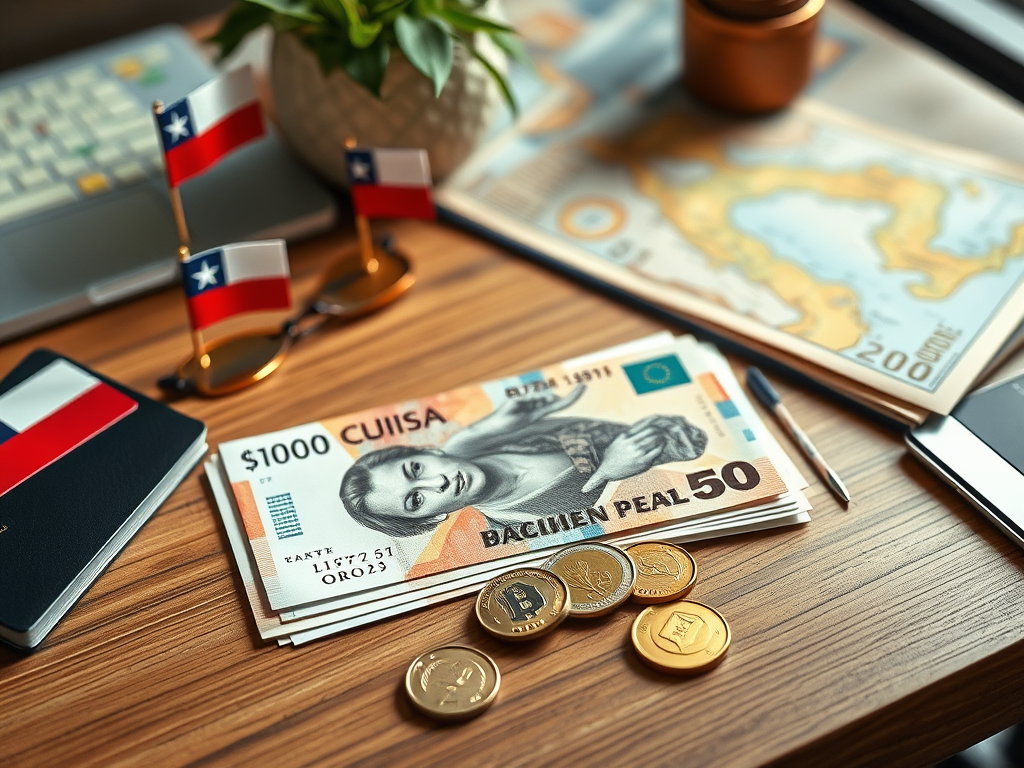
1. Currency & Basic Facts
- The official currency is the Chilean Peso (CLP, sometimes written CL$).
- Bills in circulation include 1,000; 2,000; 5,000; 10,000; 20,000 CLP. Coins: 10, 50, 100, 500 CLP.
- The CLP is a floating currency, meaning its value relative to others changes with market supply and demand (with occasional central bank intervention).
2. Exchanging Money & Using Cards/ATMs
- Exchanging foreign currency (USD, EUR) into CLP in Chile is possible, but banks and exchange bureaus may offer less favourable rates than withdrawing via ATM.
- ATMs are widespread in major cities via the network Redbanc. However, withdrawals with foreign cards can incur additional fees.
- Credit/debit cards (Visa, MasterCard, AmEx) are accepted in cities and tourist zones, but may carry surcharges and are less reliable in remote areas.
3. Banking for Expats & Cross-Border Considerations
- For foreigners, opening a full “cuenta corriente” (checking account with credit card) can be challenging; many banks require proof of monthly income, local residency status.
- Receiving international transfers into Chilean banks may require documentation about the source of funds; local regulation is relatively strict.
4. How dogpay Can Help
While dogpay is not a Chilean bank, it can assist you in navigating cross-border funds and currency use:
- If you hold funds abroad (e.g., USD, EUR) and you’ll need CLP for spending in Chile (for travel, rental deposit, business), use dogpay to convert/transfer ahead of time — reducing dependence on high‐fee onsite exchange.
- For smaller or unexpected payments (e.g., deposit, service cost, emergency) you can use dogpay to send funds in a more transparent way rather than relying solely on local cash/ATM.
- If you manage multiple currencies and want more control over conversion timing & cost (for example USD → CLP), dogpay gives you more flexibility and can help reduce losses from repeated conversions or poor spot rates.
5. Key Takeaways
- Get familiar with the Chilean peso (CLP), standard banknotes/coins and the ATM network.
- Use cards and ATMs when possible, but know the costs and carry some local currency for remote areas.
- If dealing with larger sums or multiple currencies, plan ahead: combine local banking services plus a tool like dogpay to smooth your financial flows and reduce hidden costs.