If you’re dealing with or planning to deal with Bangladesh’s financial system — whether for business, remittance, travel or relocation — here’s a clean summary of the banking environment and how dogpay may help you manage funds more smoothly.
1. Currency & Banking Landscape
- The currency of Bangladesh is the Bangladeshi Taka (৳, BDT).
- Bangladesh’s banking system has improved significantly in recent years: there are more than 50 banks operating in the country, including state-owned and private banks.
- The central bank, Bangladesh Bank, regulates currency issuance, oversees the banking sector and payment systems.
2. ATM, Cards & Foreign Transactions
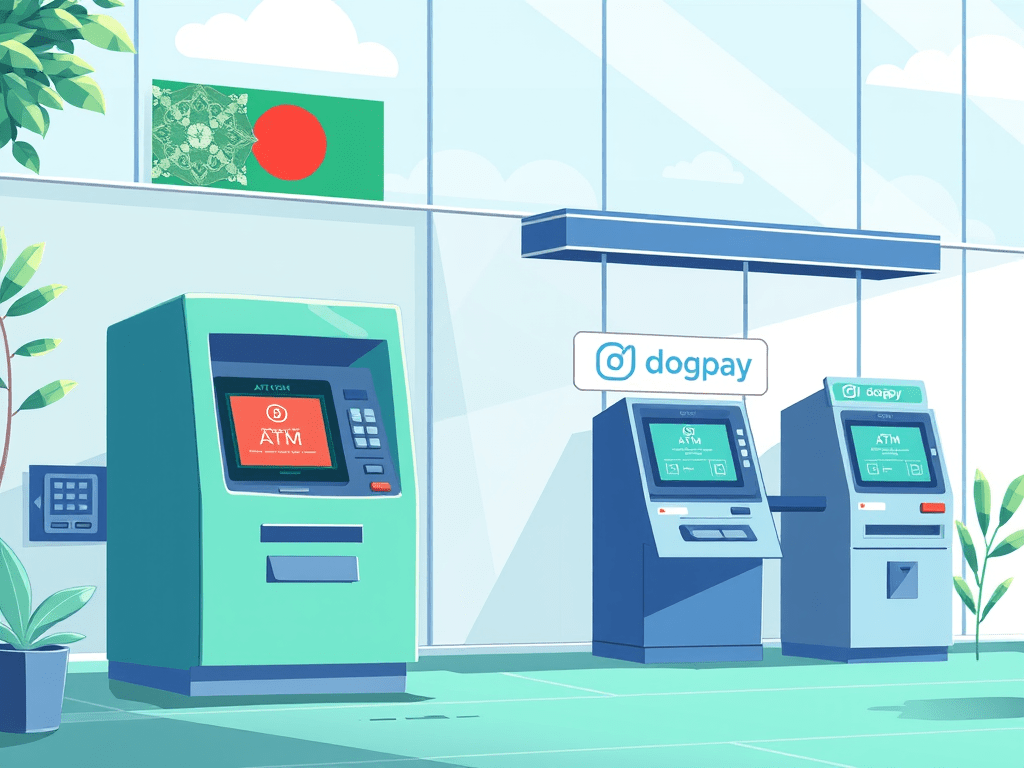
- ATMs are widespread in larger Bangladeshi cities; withdrawing via ATM can offer decent conversion rates if you are using international cards and local currency (Taka).
- However, you may incur both local fees (Bangladesh bank/ATM operator) and your home-bank fees(international withdrawal/foreign-transaction fee). For example: local ATM fee may reach up to ৳ 500 per transaction.
3. Banking Products & Digital Developments
- Several banks in Bangladesh have expanded digital services (mobile banking, ATMs, internet payments). For example, Dutch Bangla Bank is noted for its advanced ATM network.
- The payment infrastructure is evolving; new systems aim to improve inter-bank transfers, mobile financial services, digital payments.
4. How dogpay Can Help
While dogpay is not a Bangladeshi bank nor part of the local payment system, it can provide advantages when you are managing cross-border funds between Bangladesh and abroad:
- Sending funds into Bangladesh: If you have money abroad and need to set up in Bangladesh (rent, deposit, living cost), you can use dogpay to convert your home currency into BDT (through a bank or correspondent) and transfer in.
- Transferring funds out of Bangladesh: For example if you earn in Bangladesh and want to move money abroad, or support family elsewhere, dogpay can act as a tool in your process (subject to local regulations).
- Avoiding multiple conversions: Instead of converting funds abroad to USD → converting to Taka in Bangladesh with poor rates, you can use dogpay to plan the conversion path more transparently.
- Handling unexpected expenses: If sudden costs pop up (travel, emergency payment, document fees) you can leverage dogpay to move funds internationally rather than relying solely on local banking delays or expensive services.
5. Key Takeaways
- Get familiar with the Bangladeshi Taka, local banking structure, fees for international card use.
- When withdrawing or spending in Bangladesh, consider both local and your home-bank charges.
- Digital banking is expanding — make sure you pick banks with good network/ATMs.
- Using a tool like dogpay alongside local banking may help you reduce hidden conversion cost and streamline cross-border money flows.