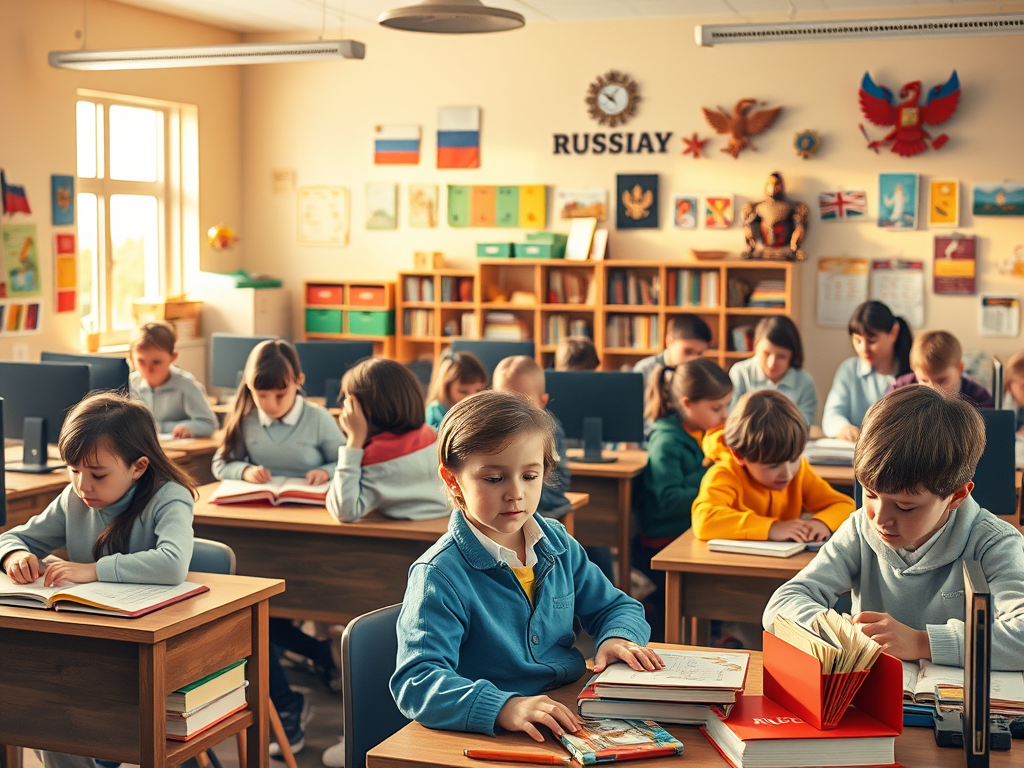
Structure & Key Features of Russian Education
- Pre-school / Kindergarten Pre-school / kindergarten (ages ~3-6) is optional, though widely used. Many families enroll children in daycare or kindergartens before official schooling begins.
- General (Compulsory) Education Formal schooling in Russia typically starts at age ~6 or 7. General education lasts 11 years (4 years of primary, 5 years of lower secondary, then 2 years of upper secondary). Students must complete state final exams. In particular, at the end of grade 9 they take the Basic State Exam (OGE) in core subjects like Russian language and mathematics. At the end of grade 11, many students take the Unified State Exam (USE), which serves as both a graduation credential and university entrance examination.
- Vocational & Technical Education After or parallel with secondary education, students can enter vocational / technical education programs (known as “technikums” or “colleges”) that may last 1 to 4 years, combining general and specialized training. Vocational paths often include trades, services, applied technical skills; graduates may receive a diploma of vocational education.
- Higher Education & Specialist Degrees Russia has moved toward the Bologna model (Bachelor + Master), but still retains the older “Specialist” degree in many disciplines. A standard bachelor’s degree is often 4 years. A master’s degree typically takes 2 additional years. Some disciplines (like medicine, engineering) may require longer time or a “Specialist” format. Beyond that, advanced degrees such as “Candidate of Sciences” and “Doctor of Sciences” exist for deep research/academic paths.
- Language & Curriculum Russian is the principal instructional language across the federation; some republics have local official languages but Russian remains the unifying language. Curricula include a base of core subjects (Russian language, mathematics, science, humanities) plus electives or specialized tracks, especially at secondary level.
- Access, Costs, & Challenges Public general education is free and compulsory through 11 years. Higher education is subsidized; some students enroll on paid contracts. Challenges include uneven quality across regions, competition for admission to top universities, language barriers for foreign students, administrative / credential recognition issues.
How Dogpay Helps in Russian Education / Payment Scenarios
When dealing with educational expenses, international students, or cross-border education services, Dogpay can offer tangible advantages:
- Tuition & Program Fee Payments If you enroll in private or international schools/universities in Russia, or foreign educational services, payments often require cross-border transfers. Dogpay lets you see exchange rates & fees on those transfers, reducing surprises and hidden costs.
- Application, Admission, & Exam Fees University applications, standardized exams, document translation/attestation often incur fees payable internationally. Dogpay streamlines these payments and provides clear transaction records.
- Study Materials, Online Courses, Subscriptions Many educational resources (e-books, online courses, software licenses) may charge in foreign currency or from overseas providers. Dogpay helps you manage these digital payments more transparently and cost-effectively.
- Housing & Living Costs for Students Students may rent accommodations, pay deposits, utility bills, and often send funds from home country. Dogpay can make such payments more efficient and traceable.
- Receipt & Records for Scholarships / Grants / Reimbursements Scholarships, grants, or reimbursements may require you to submit proof of payments. Dogpay’s exportable transaction logs and receipts help you meet documentation requirements.
- Currency Risk & Budgeting For foreign or exchange-based income (e.g. part time work, family support), using Dogpay helps you control exchange rates, limit losses, and schedule payments in more favorable windows.