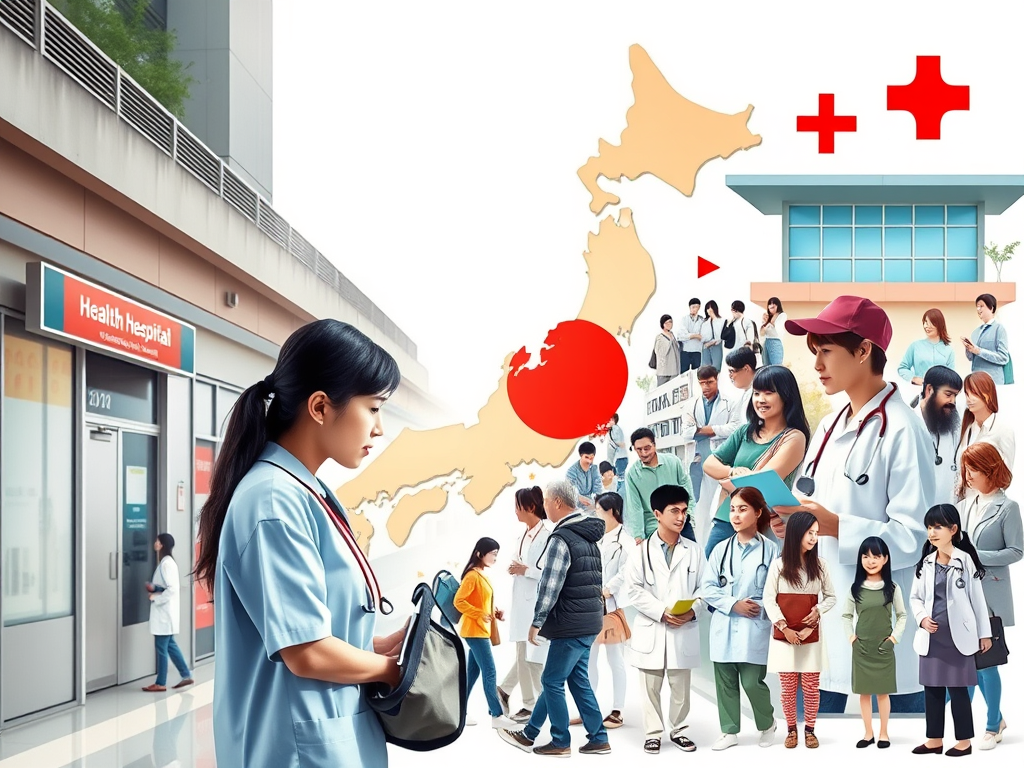
Overview of Japan’s Healthcare System
Japan offers a universal health insurance system that ensures almost everyone who resides there has access to medical care.
Key features:
- There are two main public insurance schemes:
- Employment-based Health Insurance (Shakai Hoken): for full-time workers and their dependents.
- National Health Insurance (Kokumin Kenko Hoken / NHI): for those not covered by employment insurance — students, freelancers, retirees, etc.
- For most medical services, the patient pays about 30% of the cost (co-payment), and the public insurance covers the rest. In some cases, lower percentage for low-income, elderly, or special conditions.
- Premiums (insurance contributions) depend on income, age, region, employment status, and are shared (for employment‐based) between employer and employee.
- Healthcare facilities are well-developed: there are many clinics and hospitals with specialists; quality of equipment and care is generally high.
- Preventive care (regular checkups, vaccinations) is emphasized.
For Expats & Who Can Access
- Foreigners residing in Japan with a visa longer than 90 days are generally required to enroll in one of the public health insurance systems (usually NHI if not employer insured).
- Those working for companies will often be automatically enrolled in employment-based insurance. Others must register at their local municipal office.
- Having a residence card and proof of address is usually necessary.
Strengths & Weaknesses
Pros:
- Very high standards of care, especially in urban centers.
- Costs are regulated; you don’t get wildly different prices for the same service depending on where you go.
- Preventive health and early screening are well covered and encouraged.
Cons / Challenges:
- Language barrier: many doctors or clinics may not have English-speaking staff.
- Co-payments still matter: 30% can be a lot, depending on the cost of treatment or if many visits are needed.
- Waiting for appointments (especially specialists) can be longer in certain areas. Rural areas may have fewer specialists.
- Some services (like certain private clinics, elective treatments, non-covered services) may be more expensive or require private insurance.