1. What Is Dual Citizenship?
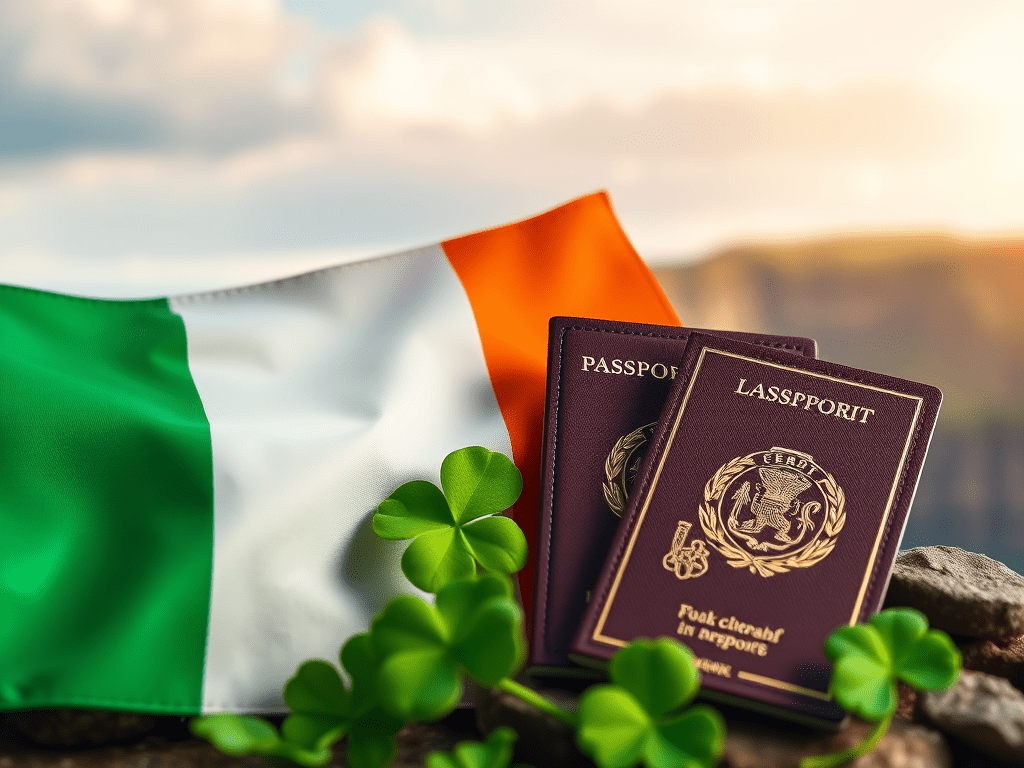
Dual citizenship means holding citizenship in two countries at the same time—both legal rights and obligations (passport, voting, residence etc.). Ireland permits dual citizenship: you can be Irish and also maintain another nationality if the other country also allows it.
2. Paths to Irish Citizenship While Keeping Your Original Nationality
- By Birth: If you were born in Ireland and at least one parent was an Irish citizen (or entitled to citizenship), you are automatically an Irish citizen. For children born after 1 January 2005, there are additional conditions tied to parents’ status and residence.
- By Descent (Foreign Births Register): If a parent or grandparent was born in Ireland, even if you were born abroad, you may register through the Foreign Births Register to claim Irish citizenship.
- By Naturalization: Foreign nationals (aged 18 or older) who have legally resided in Ireland for a required period—for example, 5 years of reckonable residence (including a recent continuous period)—can apply. Spouses of Irish citizens may have a reduced residence requirement. Other criteria include good character, documentation, etc.
3. What the Application Entails
- Registering with the Foreign Births Register (if applicable) to formalize citizenship by descent.
- Submitting required documents: birth/surname certificates, proof of ancestor’s Irish citizenship, passport(s), identity documents, proof of residence or legal permission, translations or notarization if needed.
- Meeting residence and legal requirements (if applying by naturalization): years of reckonable residence, continuous presence before application, good character, etc.
4. Benefits & Considerations
Advantages:
- Access to Irish / EU passport: visa-free travel, work, residence in EU/EEA countries.
- Retain your original citizenship (if permitted by your home country).
- Ease of accessing Irish social services, education and healthcare, rights afforded to citizens.
Things to Check:
- Whether your home country allows dual citizenship; some demand renunciation.
- Processing time and document complexity.
- Tax and legal obligations in both nations may increase.
- Potential obligations like service, declarations, or loyalty/signing citizenship ceremonies.
5. How Dogpay Can Make Dual Citizenship Process More Financially Smooth
| Scenario | Typical Financial Hurdle | How Dogpay Helps |
|---|---|---|
| Paying fees for Foreign Births Registration or citizenship applications | Multiple government fees, cross-border payments, hidden exchange fees | Dogpay allows multi-currency transactions, transparent rates, quick transfers |
| Covering document costs & legal assistance | Paying for translations, certifications, lawyers in different jurisdictions | Centralized payments & locking down costs, receipts for all services |
| Maintaining or renewing passport / national identity documents | Passport fees, renewal, mailing costs, embassy/consulate payments abroad | Efficient cross-border payment enabling timely processing |
| Financial and tax reporting between both countries | Keeping clear records of incomes, payments, obligations in both nations | Dogpay’s transaction logs and exportable statements support compliance and clarity |
6. Final Insight
If you are exploring dual citizenship in Ireland—whether by descent, birth, or naturalization—it is definitely possible under Irish law. The benefits, especially for travel, legal rights, and European Union mobility, are substantial.
By using Dogpay, you can manage the financial side with greater clarity—handling fees, translation and legal costs, and cross-border payments in a smoother, more transparent way, reducing stress and helping ensure the citizenship process goes as cleanly as possible.