Regulation E, issued under the Electronic Fund Transfer Act (EFTA), establishes consumer protection standards for electronic fund transfers (EFTs), such as ATM withdrawals, POS purchases, ACH direct deposits/payment, remittance transfers, and government benefits disbursement. It sets the rules for error resolution, fee disclosures, consumer liability, and preauthorized transfers.
Core Elements of Regulation E
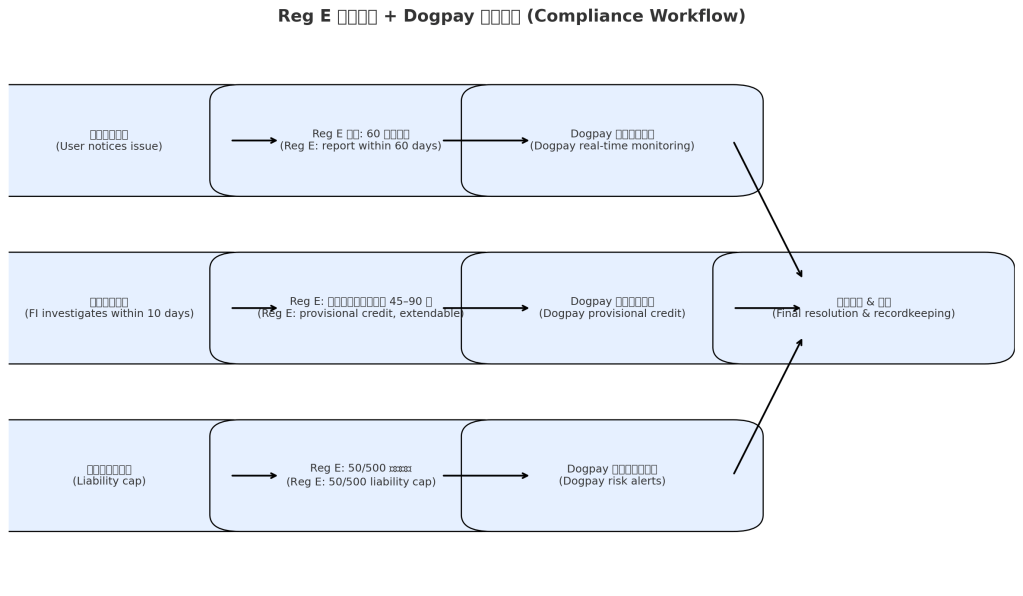
- Error Reporting & Investigation TimelineConsumers have 60 days from statement date to report errors. Financial institutions must investigate within 10 business days; with provisional credit given, the period may extend to 45–90 days depending on context.
- Consumer Liability CapsIf timely reported, consumer liability for unauthorized EFTs is capped at $50; late reporting can increase liability up to $500 or more.
- Mandatory TransparencyInstitutions must clearly disclose all EFT service terms beforehand—including rights, fee schedules, and error resolution procedures.
How Dogpay Elevates Regulation E Compliance into User-Centric Solutions
Dogpay, a cutting-edge digital payments and identity platform, turns Regulatory E’s requirements into seamless, value-added user experiences:
- Real-Time Error Detection and Auto-Initiated Dispute Process
- Dogpay monitors transactions in real time. Suspicious activity triggers an automated dispute, aligning with Reg E’s timing protocols and easing customer effort.
- Clear Risk Communication
- The interface clearly advises users of liability thresholds when reporting promptly, encouraging quick action and minimizing user exposure.
- Streamlined Disclosure Integration
- All Reg E-required disclosures are embedded into initial service onboarding, ensuring users understand their rights from the outset.
- Fast Provisional Credit System
- Dogpay automatically issues provisional refunds upon error reports, protecting user funds while investigation proceeds—complying with Reg E’s extended investigation allowances.
- Comprehensive Recordkeeping and Audit Trail
- Every transaction, dispute, credit, and resolution is logged. Records are exportable and maintained for regulatory retention periods (usually two years or more).