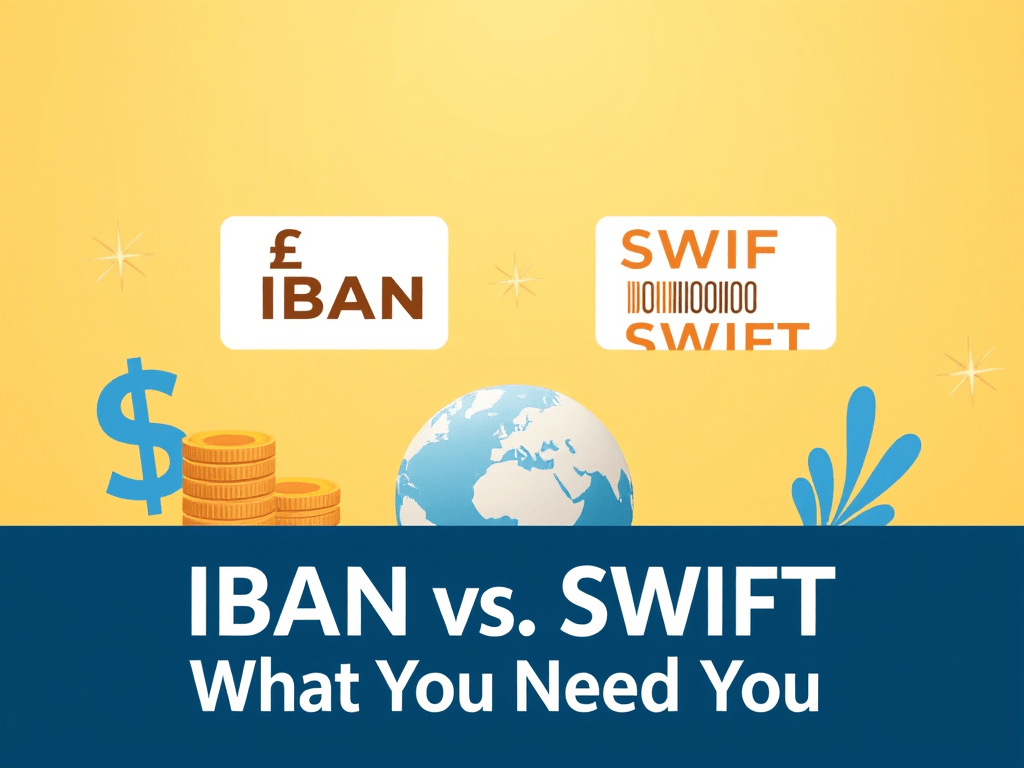
When managing international payments through DogPay, you may come across two commonly used codes: SWIFT (also known as BIC) and IBAN. Both serve key roles in ensuring your funds land in the right place, but they work differently. Here’s a clear breakdown:
1. What Does IBAN Do?
An IBAN (International Bank Account Number) uniquely identifies a specific bank account across borders. Its format can be up to 34 alphanumeric characters long and includes:
- A two-letter country code
- Two check digits for validating the number’s accuracy
- A BBAN (Basic Bank Account Number), which incorporates your domestic bank account number, sort code, branch ID, or other country-specific routing data.
Originally adopted in Europe and now used in many countries in the Middle East and Caribbean, the IBAN significantly reduces errors by enabling verification before initiating a transfer.
2. What Role Does SWIFT Play?
SWIFT—short for Society for Worldwide Interbank Financial Telecommunication—is the global messaging network that banks use to exchange secure instructions for cross-border transactions.
A SWIFT code (or BIC) identifies the specific bank (and possibly branch) involved in a transaction. This code typically contains:
- 4 characters for the bank
- 2-letter country code
- 2 characters indicating the branch or location
- Optional 3 characters referencing a specific branch
3. Key Differences at a Glance
| Code Type | Specifies | Global Use | Required for | Format |
|---|---|---|---|---|
| IBAN | Individual bank account (including branch details) | Mainly Europe, Middle East, Caribbean | Accurate routing to the exact account | Up to 34 alphanumeric characters |
| SWIFT | Bank or branch institution | Worldwide | Identifying the receiving bank for wiring | 8–11 characters (BIC) |
In short: IBAN tells who – the specific account owner; SWIFT tells where – the banking institution.
4. When Using DogPay—What You’ll Need
- To countries using IBAN (like UK, Germany, Saudi Arabia): Provide both the IBAN and the SWIFT code. The IBAN ensures the correct account; SWIFT ensures the right bank.
- To countries without IBAN (like the U.S., Canada, Australia): Typically only SWIFT codes are needed. Domestic routing systems are in place already.
5. Why Both Codes Are Crucial
- IBAN helps prevent typing errors and ensures the payment lands in the precise account.
- SWIFT ensures the message reaches the correct bank for further routing.
Using both minimizes risks of delays, bounced payments, or funds being misdirected.
Summary
For successful DogPay international transfers:
- Use IBAN when available—it targets the exact account.
- Always include the SWIFT/BIC—it identifies the receiving bank.
- In regions without IBAN, SWIFT alone usually handles the routing.
Need help for specific countries—like how DogPay handles transfers to Europe vs. Asia, or workflow tips per country? Just say the word—happy to assist!