When you’re sending or receiving international or local payments with DogPay, using the correct bank codes is essential for fast, accurate transfers. Here’s what each code means and how they fit into the DogPay experience.
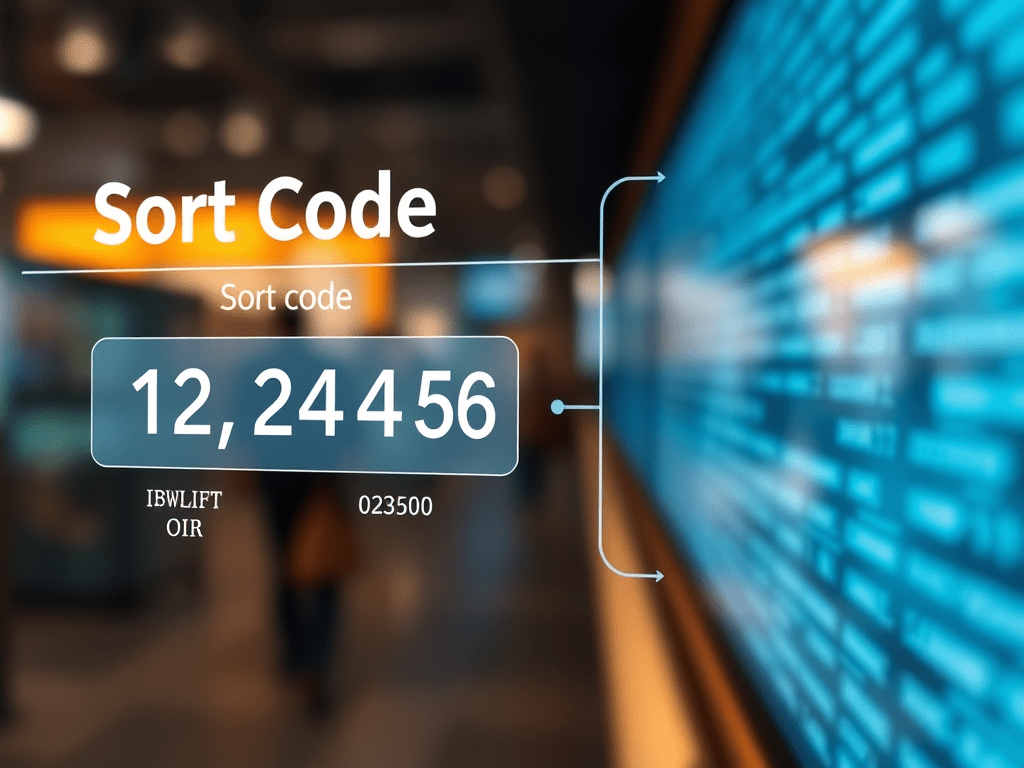
1. Sort Code (UK & Ireland)
A sort code is a six‑digit number used in the UK and Ireland to indicate the bank and branch of an account.
- Format: usually written as 12‑34‑56.
- The first two digits denote the bank; the remaining four identify the specific branch. For instance, TSB Bradford could be 77‑71‑13, while HSBC Taunton might appear as 40‑44‑04.
DogPay Use Case: To send GBP within the UK, you’ll need to provide a sort code along with the account number to ensure funds are correctly routed.
2. IBAN (International Bank Account Number)
The IBAN system standardizes international account identifiers to reduce errors and speed up payments.
- Structure: Up to 34 alphanumeric characters, composed of:
- A 2-letter country code (e.g., GB for the UK)
- 2 check digits for error detection
- The BBAN—country‑specific bank and account information
- Commonly used across the EU, Middle East, Caribbean—and even non-European countries have adopted it.
DogPay Use Case: When transferring funds to an IBAN-enabled country, inputting both the IBAN and BIC ensures your transfer arrives safely and accurately.
3. BIC / SWIFT Code (Bank Identifier Code)
Also referred to as SWIFT codes, the BIC identifies specific financial institutions (and sometimes branches) worldwide.
- Format: 8 or 11 alphanumeric characters, where:
- First 4 identify the bank
- Next 2 indicate country
- Following 2 denote location
- Last 3 (optional) specify branch
- Widely used for global transfers and the backbone of secure, high-volume messaging among banks.
DogPay Use Case: For most international transfers, DogPay requires the recipient’s BIC/SWIFT code along with the IBAN (if applicable) to ensure precise routing.
4. How They Work Together
Here’s a comparative breakdown in DogPay’s context:
| Scenario | Required Code(s) | Purpose |
|---|---|---|
| Domestic GBP transfer (UK) | Sort Code + Account Number | Routes funds within UK banking infrastructure |
| International to IBAN-enabled country | IBAN + BIC/SWIFT | Identifies account and institution globally |
| Country without IBAN (e.g., USA, Canada) | BIC/SWIFT only (plus local account info) | Ensures routing to the correct bank/institution |
In Europe and IBAN‑compatible countries, IBAN and BIC are often required together for cross-border transfers. Elsewhere (like U.S. or Canada), the BIC along with local routing codes suffice.
5. How DogPay Implements These Codes
- UK Example: Provide 12‑34‑56 (sort code) + your account number—DogPay handles GBP payouts quickly and efficiently.
- Europe Example: Enter your full IBAN plus BIC—DogPay validates with checks and executes the transfer with precision.
- Non-IBAN Countries: Enter BIC/SWIFT plus local routing numbers—DogPay ensures funds reach the correct institution and account.
Using the correct code means fewer delays, reduced manual corrections, and greater confidence as payments flow through DogPay’s streamlined system.
In Summary
- Sort Code: Used for UK/Ireland domestic routing.
- IBAN: Internationally standardized account identifier with built-in validation.
- BIC/SWIFT: Universal bank identifier essential for all cross-border payments.
- DogPay dynamically combines these based on destination requirements—smooth, accurate, and hassle-free.
Let me know if you’d like help finding specific sort codes, generating an IBAN, or locating the correct BIC for your recipient bank—DogPay’s got your back!